
Best Muscle Gain Diet Plan in India (2026) — What Actually Works vs. What Wastes Your Time
Best muscle gain diet plan in India (2026) for lean bulking, faster recovery, and real muscle growth. Learn calorie surplus, high-protein Indian meals, vegetarian and budget diet plans, best foods, supplements that work, and the biggest muscle-building mistakes ruining your gains.
Dev Mahajan
5/28/20268 min read
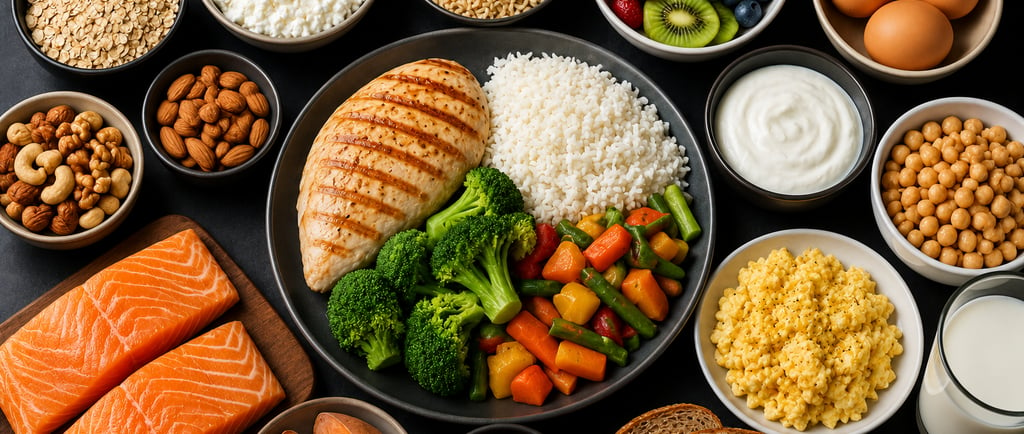
Here's something nobody in the fitness industry wants to admit openly.
Most guys who train for years and barely grow aren't failing because of their workout routine. They're failing because their diet is completely random. Some days they eat a lot. Some days they barely eat. They never track. They never adjust. And then they wonder why the mirror looks the same after six months.
Muscle doesn't care about your motivation. It cares about what you eat, consistently, every single day.
This guide is going to change how you think about your diet — not with complicated science you'll forget, but with practical strategies that actually work for Indian guys eating Indian food in real life.
What Actually Builds Muscle? Let's Get This Straight First
Before picking a diet plan, you need to understand what actually drives muscle growth. There are five things. All five matter:
Progressive overload training — lifting heavier or doing more over time
Calorie surplus — eating more than your body burns
High protein intake — the raw material your muscles are built from
Recovery and sleep — when the actual growth happens
Consistency over months — not weeks, months
Without the diet piece, your training is mostly just burning calories. You're working hard in the gym and then rebuilding nothing. Protein is the bricks. Calories are the cement. Sleep is the construction crew. Skip any of them and the building doesn't go up.
How to Calculate Your Muscle Gain Calories
Before choosing a diet plan, figure out your numbers. Here's the formula:
Step 1 — Find Your Maintenance Calories:
Bodyweight (kg) × 30–33 = approximate daily maintenance calories
Step 2 — Add Your Surplus:
Lean bulk: add 250–350 calories above maintenance
Aggressive bulk: add 400–700 calories above maintenance
Step 3 — Set Your Protein Target:
1.6 to 2.2 grams of protein per kg of bodyweight daily
Example for a 70kg person:
Maintenance: 70 × 31 = ~2,170 calories
Lean bulk target: ~2,450–2,520 calories
Daily protein: 112–154 grams
These aren't magic numbers. They're starting points. Track for two weeks, check the scale, adjust accordingly.
6 Best Muscle Gain Diet Plans — Choose What Fits Your Life
1. Lean Bulk Diet Plan — The Smartest Approach for Most People
Best for: Beginners, skinny-fat body types, people who want muscle without gaining a lot of fat
This is the approach I'd recommend to nine out of ten people reading this. You eat a small, controlled calorie surplus — just 250 to 350 extra calories above your maintenance. Enough to fuel muscle growth. Not so much that you're packing on unnecessary fat.
Macros:
Protein: 1.6–2.2g per kg bodyweight
Carbs: High — your primary fuel source
Fats: Moderate — not restricted, not excessive
Sample Indian Lean Bulk Meal Plan:
Meal
What to Eat
Breakfast
Oats with milk + 4–6 eggs + banana + peanut butter
Mid-Morning
Paneer or chicken + seasonal fruits + handful of nuts
Lunch
Rice or chapati + chicken/fish/paneer + dal + vegetables + curd
Pre-Workout
Banana + coffee + peanut butter sandwich
Post-Workout
Whey protein + white rice or potatoes + lean protein
Dinner
Chicken/paneer/soy chunks + rice or roti + salad
Before Sleep
Milk or curd + almonds or walnuts
Why it works: You build muscle at a rate close to your genetic ceiling while keeping fat gain minimal. The surplus is small enough that you stay consistent for months without needing an aggressive cut afterward.
This is the smartest, most sustainable path for natural lifters.
2. Dirty Bulk — Fast Results, Painful Consequences
Best for: Extremely underweight people, hard gainers with very fast metabolism
The dirty bulk is simple: eat everything. Burgers, pizza, mass gainers, sugary shakes, ice cream, high-calorie whatever. Weight goes up fast.
Here's the problem nobody tells you upfront — a lot of that weight is belly fat, face fat, and water retention. When you finally decide to cut, you realize you gained 8kg and maybe 2kg of it was actual muscle.
Then you spend the next four months cutting, losing strength, and wishing you'd been smarter.
The honest verdict: Useful only for genuinely underweight people or athletes with extreme caloric demands. For the average gym-goer, dirty bulking is a trap that feels productive but costs you months of unnecessary cutting later.
3. Clean Bulk Diet Plan — For Long-Term Aesthetics
Best for: Fitness-focused individuals, athletes, people playing the long game
Clean bulking follows the same surplus logic as lean bulking but with strict food quality standards. You're eating the right amount AND the right foods. No processed junk. No shortcuts.
Primary food sources:
Carbs: Rice, oats, sweet potatoes, fruits, whole wheat roti
Protein: Chicken breast, eggs, fish, paneer, whey
Fats: Nuts, peanut butter, seeds, controlled ghee
Benefits you'll actually feel:
Better digestion (your gut will thank you)
More stable energy throughout the day
Less bloating
Better skin
Better training performance
The honest downside: This requires daily discipline. Not just willpower for one good day — real consistency across weeks and months. It's harder mentally than dirty bulking, but the results are genuinely better over time.
4. High-Carb Muscle Gain Diet — Fuel Your Training Properly
Best for: Heavy lifters, people training intensely 4–6 days a week, fast metabolism types
There's a widespread fear of carbohydrates in Indian fitness culture that genuinely holds people back. Carbs are not the enemy. For muscle building, carbs are arguably your most important macronutrient after protein.
Here's what carbs actually do:
Refill muscle glycogen depleted during training
Directly improve strength output during workouts
Speed up recovery between sessions
Preserve muscle by sparing protein for building rather than energy
Best carb sources for Indian lifters: Rice, oats, roti, potatoes, sweet potatoes, bananas, fruits, pasta
Low-carb muscle building is possible but significantly slower for most natural lifters. If you're training hard, eat your carbs.
5. Vegetarian Muscle Gain Diet — Yes, It Works
Best for: Vegetarians, vegans, people who prefer plant-based eating
Let's settle this argument permanently. Vegetarians absolutely can build serious muscle. The challenge isn't that vegetarian protein doesn't work — it's that you have to be more intentional about hitting your protein targets.
Best vegetarian protein sources available in India:
Soy Chunks (Dry) — ~52g protein per 100g
Whey Protein — ~25g protein per scoop
Paneer — ~18g protein per 100g
Greek Yogurt — ~10g protein per 100g
Tofu — ~8g protein per 100g
Lentils (Cooked) — ~9g protein per 100g
Peanut Butter — ~25g protein per 100g
Sample Vegetarian Muscle Gain Day:
Breakfast: Oats with milk + banana + peanut butter + protein shake
Lunch: Rice + dal + paneer + salad
Snacks: Roasted chana + fruits + nuts
Dinner: Soy chunks or tofu or paneer + chapati + vegetables
What vegetarians must focus on specifically:
Total protein across all meals (don't leave it to chance — track it)
Amino acid completeness (combine different protein sources)
Vitamin B12 supplementation (almost universally deficient in vegetarians)
Iron intake (non-heme iron from plants absorbs less efficiently than meat-based iron)
Vegetarian muscle building works. It just demands more attention to detail on the nutrition side.
Budget Muscle Gain Diet — No, You Don't Need Expensive Supplements
Best for: Students, anyone working with a tight monthly food budget
This one is particularly important to say loudly: you do not need expensive food to build muscle.
Some of the highest protein-per-rupee foods available in India:
Eggs — Cheap, complete protein, incredibly versatile
Soy Chunks — ₹80–100 per 200g, over 100g of protein, insane value
Curd (Dahi) — Cheap, probiotic, solid protein source
Dal — Everyday Indian staple with protein, fiber, and iron
Bananas — Cheap, high-carb, perfect pre-workout fuel
Peanut Butter — Calories, protein, and healthy fats in one affordable package
Milk — Casein + whey protein in a glass, available everywhere
Oats — Cheap, slow-digesting carb, easy breakfast option
Rice — Affordable and effective primary carb source
Potatoes — Cheap, calorie-dense, and good carb source
The brutal truth that supplement brands don't want you to know: most beginners spend thousands on whey, creatine, and BCCAs while eating two meals a day with barely any protein. The food is what builds the muscle. Supplements are a small edge on top of a solid diet — not a replacement for one.
Get your food right first. Supplements later, if at all.
Best Foods for Muscle Gain in India — The Master List
Protein Sources (Non-Negotiable)
Eggs, chicken breast, fish, paneer, soy chunks, tofu, whey protein, curd, milk, dal, beans, lean beef (if applicable)
Carbohydrate Sources (Your Training Fuel)
Rice, oats, roti, sweet potatoes, regular potatoes, fruits, whole wheat bread, poha, upma base
Healthy Fat Sources (Don't Cut These)
Peanut butter, almonds, walnuts, seeds (flax, chia, pumpkin), olive oil, controlled amounts of ghee, eggs (yolk included)
Meal Timing — Does It Actually Matter?
Yes, but probably less than you think. Here's the simplified version:
Pre-Workout (60–90 minutes before): Carbs + moderate protein. Fuel the session. A banana and peanut butter sandwich works perfectly.
Post-Workout (within 60 minutes): Fast protein + carbs. This is when your muscles absorb nutrients most efficiently. Whey protein with white rice or a banana is a classic for a reason.
Before Sleep: Slow-digesting protein. Your body recovers and builds muscle during sleep. Give it material to work with. Milk, curd, or paneer before bed works well.
Meal timing matters at the margins. Total daily protein and total daily calories matter far more. Get those right first.
Supplements That Actually Help vs. What's Mostly Hype
Actually Worth Using:
Whey protein — the most efficient way to hit protein targets when food falls short
Creatine monohydrate — the single most researched and proven performance supplement
Fish oil — reduces inflammation, supports recovery and joint health
Multivitamin — only if your diet has clear nutritional gaps
Mostly Overhyped:
Mass gainers — expensive sugar and cheap protein. Just eat real food.
Testosterone boosters — almost universally useless for natural lifters
BCAAs — unnecessary if you're already hitting adequate protein from whole foods
Fat burners — marketing products, not science products
The supplement industry in India has exploded alongside the fitness culture boom. That's great for awareness, terrible for wallets. Be skeptical of anything claiming dramatic results. The supplement that matters most is the meal you're about to eat.
The Biggest Muscle Gain Diet Mistakes (Most Guys Make All of These)
1. Not Tracking Calories
Everyone "feels" like they eat a lot. Most people, when they actually track, discover they're eating 400–600 calories less than they thought. Track for at least two weeks before drawing any conclusions.
2. Chronically Low Protein
Without adequate protein, your recovery slows and your growth stalls. 1.6–2.2g per kg is the evidence-based range. Hit it consistently, not occasionally.
3. Carb Phobia
Avoiding carbs while trying to build muscle is like trying to run a car on no fuel. Carbs power your training. Training drives muscle growth. Cut carbs too severely and your workouts suffer, which means your gains suffer.
4. Bulking Too Aggressively
More calories do not mean faster muscle growth. Your body has a ceiling for how much muscle it can build in a given time. Go too far over maintenance and the excess becomes fat — not muscle.
5. Inconsistent Eating
Muscle is built through repetition over months. Eating perfectly for three days and then barely eating for two more is not a strategy — it's chaos. Your body adapts to patterns. Give it one.
Frequently Asked Questions
Q: What is the best diet plan for muscle gain in India?
A lean bulk diet plan works best for most Indians — a small calorie surplus of 250–350 calories above maintenance with 1.6–2.2g protein per kg bodyweight, using everyday Indian foods like rice, dal, eggs, paneer, chicken, and oats.
Q: How much protein do I need to build muscle?
1.6 to 2.2 grams per kg of bodyweight daily is the evidence-based range. A 70kg person needs approximately 112–154 grams of protein per day.
Q: Can vegetarians build muscle in India?
Absolutely. Indian vegetarian foods like soy chunks, paneer, curd, dal, milk, and peanut butter provide solid protein. Vegetarians should also consider supplementing Vitamin B12 and tracking total daily protein carefully.
Q: Is dirty bulking worth it?
For most people, no. Weight goes up quickly but much of it is fat. Cutting afterward is time-consuming and you lose strength. A lean bulk produces better results without the painful cut phase.
Q: What should I eat after a workout in India?
Post-workout, eat fast-digesting protein and carbs — whey protein with rice or a banana, or eggs with potatoes. The goal is rapid nutrient delivery to muscles when they're most receptive.
Q: Do I need supplements to build muscle?
No. Creatine monohydrate and whey protein are genuinely useful, but neither is required. Real food builds muscle. Supplements help at the margins when diet falls short.
Q: How long does it take to see muscle gain results with a proper diet?
With consistent training, adequate protein, and a calorie surplus, most beginners notice meaningful changes within 8–12 weeks. Real muscle transformation requires 6–12 months of genuine consistency.
Q: What is the cheapest muscle gain diet in India?
Eggs, soy chunks, curd, dal, rice, oats, bananas, milk, and peanut butter give you everything you need at very low cost. Budget is not a genuine barrier to building muscle in India.
What 90% of People Should Actually Do
Stop searching for the perfect plan. Here's what works:
Lean bulk with 250–350 calories above maintenance
Hit 1.6–2.2g protein per kg bodyweight every day
Eat carbs — don't fear them
Train progressively with heavy compound lifts
Sleep 7–9 hours
Be patient for months, not weeks
That combination, done consistently, beats every "anabolic" scam, every influencer transformation shortcut, and every overpriced supplement stack available.
Your body is a long-term adaptation machine. Feed it correctly. Train consistently. Give it time.
The results will come. They always do when you stop cutting corners.
Nutritional values mentioned are approximate. Individual calorie needs vary based on activity level, metabolism, and body composition. For specific medical dietary needs, consult a registered dietitian.